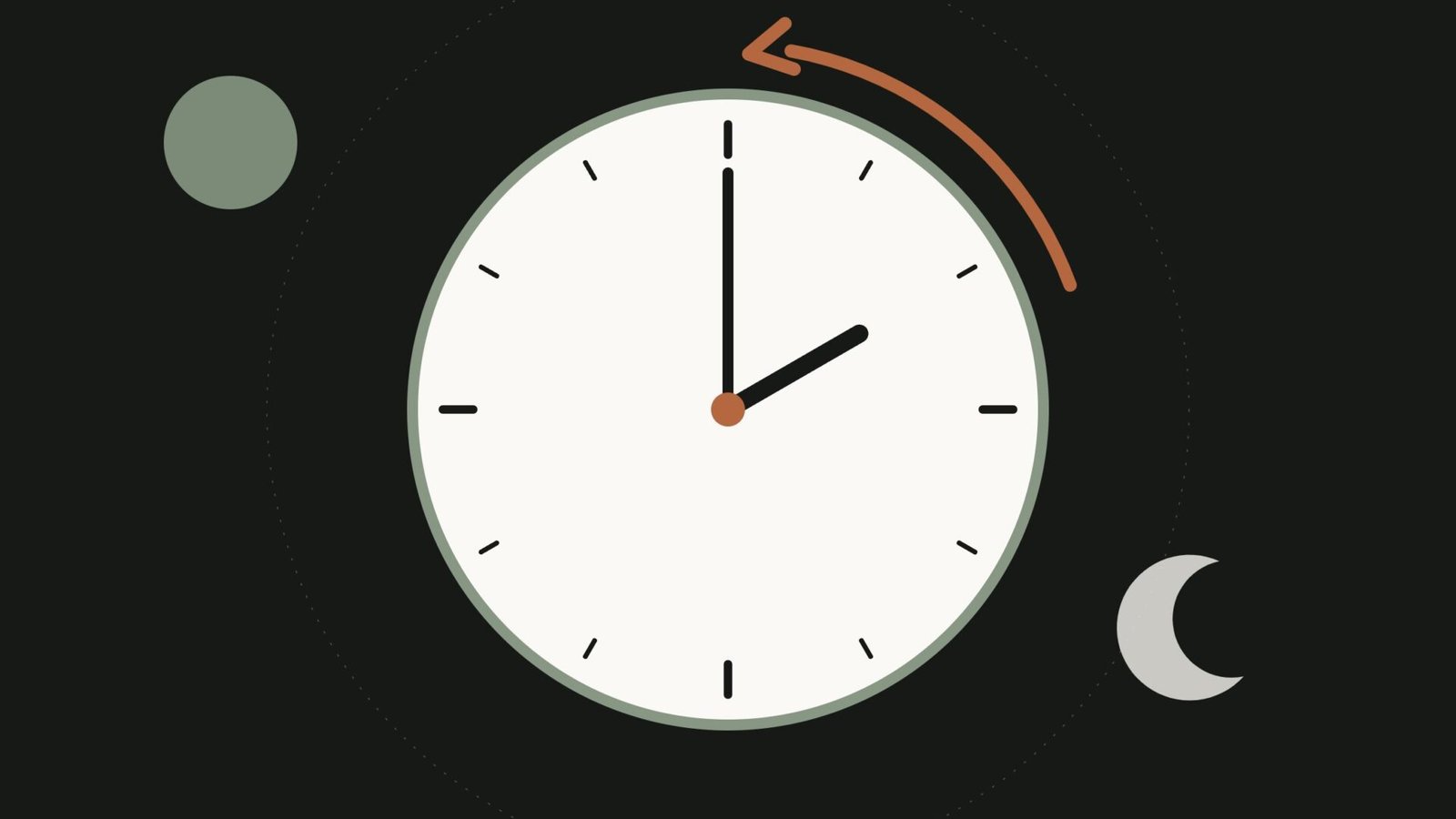
In the United Kingdom and most of Europe, clocks go back one hour on Sunday, 25 October 2026. At 2 a.m. in the UK, the time returns to 1 a.m., giving people an extra hour overnight.
In the United States and most of Canada, clocks go back on Sunday, 1 November 2026. Australia has a different schedule: clocks moved forward in the states that observe daylight saving time on 4 October 2026.
Most smartphones and computers update automatically when their time-zone settings are correct. However, traditional watches, car clocks and some household appliances may need to be adjusted manually.
But why do we still change the clocks twice a year? The practice began more than a century ago, and although several governments have considered ending it, the debate is far from over.
When Do the Clocks Change in 2026 and 2027?
The dates depend on the country and its daylight saving time rules. Here are the main dates to know.
| Country or region | Clocks go back in 2026 | Clocks go forward in 2027 |
|---|---|---|
| United Kingdom | Sunday, 25 October | Sunday, 28 March |
| European Union | Sunday, 25 October | Sunday, 28 March |
| United States (most areas) | Sunday, 1 November | Sunday, 14 March |
| Canada (most areas) | Sunday, 1 November | Sunday, 14 March |
| Australia (states that observe daylight saving) | No autumn change in October; clocks moved forward on 4 October | Sunday, 3 October: clocks move forward; Sunday, 4 April: clocks go back |
Important: These dates apply to the main daylight saving schedules, not every location. Some regions do not observe daylight saving time, and local rules can differ. In the European Union, the autumn change takes place at 1:00 a.m. UTC, while local clock times depend on the time zone.
Sources: GOV.UK — When do the clocks change?, NIST — Daylight Saving Time, European Union legislation and Reserve Bank of Australia — Daylight Saving.
Why Do the UK and US Change Their Clocks on Different Dates?
The UK follows a straightforward rule: clocks move forward on the last Sunday in March and back on the last Sunday in October.
The United States uses a different schedule. Under the current federal rules, daylight saving time begins on the second Sunday in March and ends on the first Sunday in November.
Most Canadian provinces follow a similar schedule to the United States, although there are important regional exceptions.
Australia is in the Southern Hemisphere, where summer falls during the Northern Hemisphere’s winter. Its seasonal clock changes therefore happen in the opposite part of the year. Queensland, Western Australia and the Northern Territory do not observe daylight saving time.
Why Do We Change the Clocks at All?
The basic idea is to make better use of daylight during the months when days are longer.
In summer, the sun can rise very early, while many people are still asleep. Moving the clocks forward in spring shifts an hour of daylight from the morning into the evening, when people may be commuting, shopping or spending time outdoors.
In autumn, the clocks return to standard time. This gives people more daylight earlier in the morning, although evenings become darker sooner.
The system is not without controversy. Supporters value lighter evenings, while critics question whether the benefits outweigh the disruption to sleep, routines and timekeeping.
Was Benjamin Franklin the Inventor of Daylight Saving Time?
Benjamin Franklin is often credited with inventing daylight saving time, but this is misleading.
In 1784, while living in Paris, Franklin wrote a humorous essay about how Parisians could save money on candles by getting up earlier and making better use of morning sunlight. His suggestions included waking people with cannon fire at sunrise.
It was satire, not a serious proposal to move clocks forward and backward twice a year.
The modern campaign for seasonal clock changes came later.
William Willett’s Campaign
British builder William Willett became a prominent advocate of daylight saving time. In 1907, he published a pamphlet called The Waste of Daylight, arguing that people could enjoy more evening daylight if clocks were advanced during the warmer months.
Willett campaigned for the idea, but he did not live to see it introduced in Britain. He died in 1915, before the country adopted summer time during the First World War.
How the First World War Made Daylight Saving Time Law
Energy conservation became a more urgent concern during the First World War.
In 1916, Germany introduced daylight saving time, followed by other European countries. The aim was to reduce demand for artificial lighting and conserve fuel during wartime.
Britain followed with the Summer Time Act 1916. The country’s first clock change under the new system took place on 21 May 1916.
The United States introduced daylight saving time nationally in 1918, although its use and rules changed over subsequent decades.
What began as a wartime measure eventually became a recurring feature of everyday life in many countries.
Britain Tried Double Summer Time
During the Second World War, Britain adopted an even more unusual arrangement.
British clocks remained one hour ahead of Greenwich Mean Time during winter and moved two hours ahead during summer. This system became known as British Double Summer Time.
The aim was to make more daylight available during the working day while the country was at war.
The UK’s 1968–1971 Experiment
Britain also experimented with keeping clocks one hour ahead of Greenwich Mean Time throughout the year.
The experiment, known as British Standard Time, ran from 1968 to 1971. Supporters welcomed the lighter evenings, but critics raised concerns about dark winter mornings, particularly in Scotland and northern England.
The experiment ended, and the UK returned to the seasonal clock-changing system.
How the United States and Europe Set Their Rules Today
Although both regions change their clocks, their legal arrangements are different.
United States: The Current Daylight Saving Schedule
The United States currently follows rules established under the Energy Policy Act of 2005, which took effect in 2007 and extended the daylight saving period.
According to the US National Institute of Standards and Technology, daylight saving time now covers approximately 238 days of the year, or around 65%.
The standard schedule is:
- Spring: Clocks move forward on the second Sunday in March.
- Autumn: Clocks move back on the first Sunday in November.
Not every US location participates. Hawaii does not observe daylight saving time, and most of Arizona does not either, although the Navajo Nation observes it. US territories including Puerto Rico, Guam, American Samoa and the US Virgin Islands also remain on standard time throughout the year.
Source: NIST — Daylight Saving Time Rules.
European Union: A Shared Clock-Change Schedule
European Union countries coordinate their seasonal clock changes under Directive 2000/84/EC.
Under the rules, summer time begins at 1 a.m. UTC on the last Sunday in March and ends at 1 a.m. UTC on the last Sunday in October.
The shared schedule helps coordinate transport, communications and cross-border business. However, EU countries retain the ability to choose their standard time zone.
This means the change occurs at the same moment, but the local clock time differs between countries.
Source: EUR-Lex — Directive 2000/84/EC.
Which Countries Do Not Change Their Clocks?
Many countries near the equator do not use daylight saving time because the length of daylight changes relatively little throughout the year.
Other countries have tried seasonal clock changes and later abandoned them. Russia, for example, stopped changing its clocks seasonally in 2014. Turkey also ended its seasonal clock changes in 2016.
There is no single global rule. Each country decides whether seasonal clock changes suit its geography, economy and public needs.
Does Changing the Clocks Still Save Energy?
Energy conservation was one of the original arguments for daylight saving time. The reasoning was that longer evenings would reduce the need for artificial lighting.
However, the evidence is mixed.
A US Department of Energy report published in 2008 examined the effects of the longer daylight saving period introduced in 2007. It estimated electricity savings of approximately 0.5% per day during the extended period.
That finding does not mean every country or household will achieve the same result. Energy consumption depends on climate, heating and cooling systems, working hours, building design and household habits.
For example, extra evening daylight may reduce the use of lights but increase air-conditioning demand in some locations. Changes in energy technology and modern lifestyles also mean the conditions today differ from those in 1916.
The overall energy benefit remains uncertain and is only one part of the wider debate.
Is Daylight Saving Time Being Scrapped?
Governments have considered ending seasonal clock changes, but agreeing on what should replace them has proved difficult.
Europe: A Proposal That Stalled
In 2018, the European Commission proposed ending the twice-yearly clock changes across the European Union. The proposal followed a public consultation and growing debate about whether the system remained necessary.
The European Parliament supported ending seasonal changes in 2019. However, EU governments in the Council have not agreed on a common position, and the legislation needed to end the system has not been adopted.
One challenge is deciding whether countries should remain permanently on summer time or standard time. Different choices could create problems for transport, trade and coordination between neighbouring countries.
For now, the existing system remains in place.
Source: Council of the European Union — Seasonal Clock Changes.
United States: Could Daylight Saving Time Become Permanent?
The United States has also debated whether to stop changing clocks.
The Sunshine Protection Act has been introduced in Congress to make daylight saving time permanent. However, a proposal does not become law simply because it receives political support; it must complete the required legislative process.
There is also disagreement about which permanent time would be preferable. Some advocates favour keeping the lighter evenings associated with daylight saving time, while sleep researchers have raised concerns about the effects of permanent daylight saving time on the body’s natural clock.
Until federal law changes, the current seasonal schedule remains in effect.
For the latest legislative position, check Congress.gov.
How to Cope With the Clock Change
The autumn change is often considered easier than the spring change because the clock moves back and the night gains an extra hour. Even so, a shift in timing can temporarily affect sleep and daily routines.
A few simple steps may help:
- Keep a regular bedtime. Try to maintain a consistent sleep and wake schedule around the change.
- Get daylight in the morning. Natural light helps regulate the body’s internal clock.
- Adjust gradually if needed. If you are sensitive to schedule changes, shift bedtime slightly over several days.
- Check manual clocks. Remember appliances, car clocks, wall clocks and traditional watches that may not update automatically.
- Take extra care when travelling. Confirm local times for flights, trains, appointments and online meetings, especially when crossing time zones.
Children, shift workers and people who already have irregular sleep schedules may need extra time to adjust.
Will We Still Be Changing the Clocks in 2027?
Under the rules currently in place, the UK and European Union are scheduled to move their clocks forward on Sunday, 28 March 2027. The United States and most participating areas of Canada are scheduled to make the spring change on Sunday, 14 March 2027.
Australia’s participating states and territories will move their clocks back on Sunday, 4 April 2027, before the next spring change in October.
These dates could be affected by future legislative changes, so it is sensible to check official government guidance as each change approaches.
The bigger question remains unresolved: should countries keep seasonal clock changes, adopt permanent summer time or return to standard time throughout the year?
Until governments agree on a replacement, the twice-yearly ritual is likely to continue.
For now, remember the simple rule: spring forward, fall back. In autumn, clocks go back one hour; in spring, they move forward again.
Sources and Further Reading
- GOV.UK — When do the clocks change?
- NIST — Daylight Saving Time Rules
- EUR-Lex — Directive 2000/84/EC
- Council of the European Union — Seasonal Clock Changes
- Reserve Bank of Australia — Daylight Saving Dates
- NSW Government — Daylight Saving in 2026 and 2027
- Congress.gov — US Legislation
Last updated: 21 October 2026.
Comments